
Last updated November 15, 2026
 Sweep & inspection
 Caps & crowns
 Flue relining
 Masonry repair
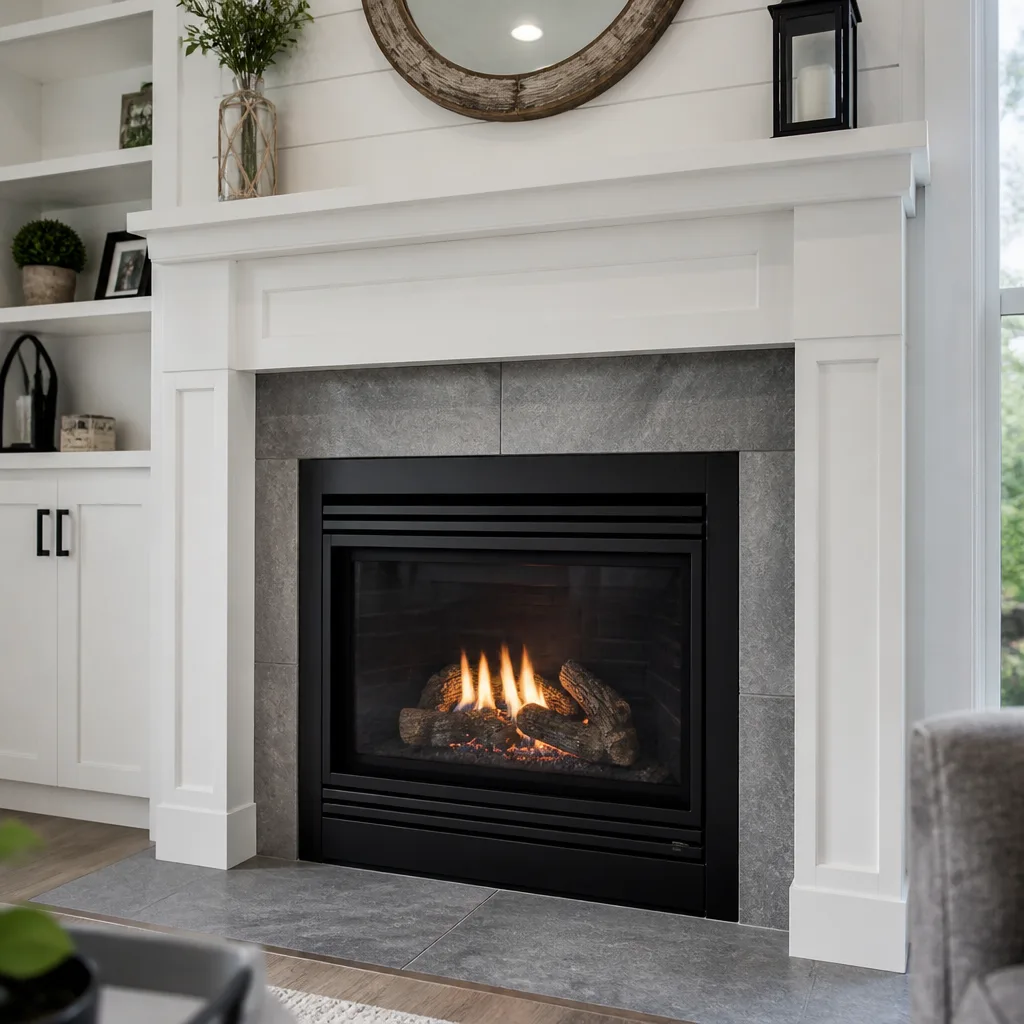 Gas fireplace service
Level 1 sweep and inspection to the NFPA 211 annual standard - flue, crown, cap, and flashing checked and photographed
Chimney sweep logs do not sweep chimneys. They loosen some creosote - which then falls where a brush and vacuum still have to collect it.
How to Hire a Chimney Cleaning Contractor in North Charleston: A Step-by-Step Guide
South Carolina doesn’t require a chimney sweep to hold a state license. That single fact should change how you shop for one. Most hiring guides hand you a friendly checklist and skip right past it, which leaves homeowners in North Charleston comparing contractors on price and a handshake. In this guide, we’ll walk through what the CSIA, NFI, and NCSG credentials actually verify, the five questions that reveal whether a company treats a chimney as a system or just a hole to brush, how to read a written estimate, and the warning signs we see when low-bid work comes back around. By the end, you’ll know exactly what to ask before anyone sets foot on your roof.
Quick Answer
To hire a chimney cleaning contractor in North Charleston, verify a CSIA or NFI certification independently, ask whether the company sweeps, inspects, and repairs with its own team, and require a written estimate itemized with a camera inspection and photo report. Because South Carolina does not license chimney sweeps, those third-party credentials and a transparent written scope are your best objective signals of quality. Expect an estimate before any work begins, and never accept a quote given from the driveway without an inspection.
Styles & brands we work with
- Sweep & inspection
- Caps & crowns
- Flue relining
- Masonry repair
- Gas fireplace service
Table of Contents
- Why South Carolina Has No Chimney Sweep License
- What the CSIA, NFI, and NCSG Credentials Actually Verify
- The Five Questions to Ask Before You Book
- Red Flags in the Charleston Metro Market
- How to Read a Written Chimney Estimate
- Why a Generalist Handyman Voids Liner Warranties
- Treating Your Chimney as a System
- What’s Different About Hiring in North Charleston
Why South Carolina Has No Chimney Sweep License
South Carolina doesn’t issue a state license for chimney sweeps. That means there’s no state database to check, no license board to call, and no enforcement mechanism that removes an unqualified sweep from the market. A business that sweeps chimneys in North Charleston is registered like any other business, but nothing on that paperwork confirms it knows how to inspect a flue or install a liner to manufacturer specifications.
For homeowners, that creates an unusual situation. In a licensed trade, you can check a number and get some assurance. In chimney work, the vetting falls on you. That’s not a reason to avoid getting your chimney serviced. It’s a reason to ask better questions than “how much?” and “when can you come?”
The credential that fills this gap in the chimney trade is certification through the Chimney Safety Institute of America, or CSIA. It’s a voluntary professional credential, not a state license, but it involves testing and continuing education. When there’s no government standard, the industry’s own credentials become the standard.
Two other acronyms matter: NFI, the National Fireplace Institute, and NCSG, the National Chimney Sweep Guild. Each verifies something specific, and knowing which one applies to your chimney type is part of vetting correctly. We’ll cover those next.
What the CSIA, NFI, and NCSG Credentials Actually Verify
Each credential covers a different slice of chimney knowledge. A company might hold one, two, or all three, and the combination tells you what kind of work it’s equipped to do.
- CSIA (Chimney Safety Institute of America) – The CSIA certifies chimney sweeps and inspectors. It verifies that a technician has passed an examination on chimney and venting fundamentals, inspection standards, and safety, and it requires continuing education to stay current. A CSIA-certified sweep is the core credential for routine cleaning and inspection work.
- NFI (National Fireplace Institute) – NFI certifies technicians around specific appliance types, including wood-burning and gas systems. If your home has a wood stove, a gas insert, or a high-efficiency fireplace, an NFI-certified technician has documented knowledge specific to installing and venting that appliance correctly, plus a solid grasp of clearances and sizing.
- NCSG (National Chimney Sweep Guild) – NCSG is the trade association. Membership signals that a company engages with the broader profession, follows its standards, and participates in the community that develops good practice.
These credentials aren’t a government seal, but they’re checkable. A certification has a registry behind it, and any company claiming one should be able to direct you to a way of confirming it. Ask directly: “Can I verify your CSIA number independently?” A qualified specialist will answer without hesitation.
The Five Questions to Ask Before You Book
These questions separate a chimney specialist from someone with a van and a brush. Ask them before you schedule, and listen for the substance in the answer rather than the speed.
- Do you sweep, inspect, and repair with the same team? A specialist can identify a cracked flue, recommend relining, and do the relining itself. A sweep-only operation has to stop at the diagnosis and send you looking for someone else. Every handoff is a chance for a small problem to grow before the next contractor sees it.
- What does your inspection include, and do I get photos? The answer you want is a camera inspection with a photo report. Photos let you see the flue for yourself rather than taking someone’s word for it. If the answer is “we just look from the firebox,” that’s not an inspection that can catch a cracked flue liner higher up.
- What brands do you install? Professional-grade materials carry manufacturer warranties, and a chimney specialist will name the brands because the names mean something to them. Generalist contractors often can’t tell you what material they’d use because they source it job by job.
- How do you price the work? Ask for a written estimate with line items. The sweep should be one line. Any repair or replacement should be its own line with a description. The written estimate sets the final price, and you shouldn’t hear a number change after work starts.
- What certifications do you hold, and can I verify them? Reference CSIA, NFI, and NCSG by name. A qualified contractor will recognize all three and explain which apply to your setup. A contractor who doesn’t recognize them isn’t plugged into the professional side of the trade.
If you want to see how a system-based sweep works in practice, our chimney sweep covers the inspection-first process we follow on every visit.
Red Flags in the Charleston Metro Market
Low-bid chimney contractors show up across the Charleston metro market with predictable patterns. Some are well-intentioned but simply lack the training. Others are designed to get in the door cheap and find problems once they’re up there. Here’s what to watch for.
- A price quoted before inspection. If someone can quote a full chimney service without looking inside the flue, they’re guessing. Chimney work is diagnostic by nature.
- Pressure to reline on the spot. Liner replacement is a structural repair. A contractor who finds “urgent” problems and offers to start today, without showing you the evidence, is telling you something about how they sell.
- No camera, no photos. A camera inspection with a photo report is standard professional practice. If there’s no camera, you’re buying an opinion, not a diagnosis.
- Unbranded materials. A generalist who sources liners and sealants job by job can’t tell you their warranty terms and isn’t bound by a manufacturer’s installation requirements. Professional installers can.
- Vague scope of work. “Full chimney service” means nothing. A written estimate names what happens, how much of each task, and what materials will be used.
- No certification you can verify. In a state with no licensing requirement, this is the big one. A contractor who can’t point you toward an independent credential is asking you to trust them on nothing.
None of these red flags requires a specific incident to matter. They’re structural. A contractor who operates this way will keep operating this way.
How to Read a Written Chimney Estimate
A written estimate for chimney work should read like a scope of work, not a single number. Here’s what should always appear, and what shouldn’t be missing.
- Line items for each task. Sweep, inspection, repair, relining, and cap replacement should each be separate. Bundled figures make it impossible to compare quotes or to say no to a piece you don’t need.
- Camera inspection and photo report included. These are standard professional practice. They should be named, not implied.
- Materials named by brand. A professional-grade estimate identifies the liner material, cap, and sealant products by name. This is your evidence the contractor is using manufacturer-specified products for the job.
- A statement that the written estimate sets the final price. You want a flat price agreed before work starts, not an estimate that morphs into a bill.
- A scope you can read without a decoder. If you can’t picture what happens from reading the estimate, ask them to rewrite it.
The omission that matters most is the inspection. If it’s not itemized, either the contractor isn’t doing one, or it’s buried somewhere you can’t evaluate it. Either answer tells you something.
A contractor who recommends liner replacement without a camera report is asking you to spend real money on faith. We don’t do that, and you shouldn’t accept it.
Why a Generalist Handyman Voids Liner Warranties
Most flexible liner manufacturers require installation by a qualified contractor following specific procedures. When a generalist handyman installs a liner without meeting those requirements, the manufacturer’s warranty can be voided entirely. That’s an expensive surprise to discover years later, when the liner fails and the manufacturer declines the claim.
The same issue applies to flue sealants and resurfacing products. Manufacturer warranties on these materials are typically tied to application by a trained or certified installer. A chimney specialist certified to apply a specific product’s method carries the warranty that comes with it.
The best liner system in the world installed by someone outside the manufacturer’s requirements is a liner without a warranty. That’s why a specialist can point to specific brands and say, credibly, what warranty covers them. HeatShield resurfacing, for example, is a manufacturer-specific process with an application method, not a product you can slap on a flue. A generalist can’t install it correctly any more than a homeowner can.
Specialists also carry the chimney repair scope that follows a problem to ground: relining, crown repair, resurfacing, cap replacement. A generalist who stops at the cleaning phase leaves you to find the next contractor yourself.
Treating Your Chimney as a System
A chimney is a system. The firebox, the flue, the liner, the crown, the cap, and the flashing all work together. When one component underperforms, the others wear faster. That’s why a $150 visit that only sweeps the flue can leave behind the actual problem.
Here’s how a specialist checks the system:
- The firebox – signs of cracked brick, gaps at the smoke shelf, deteriorating mortar joints.
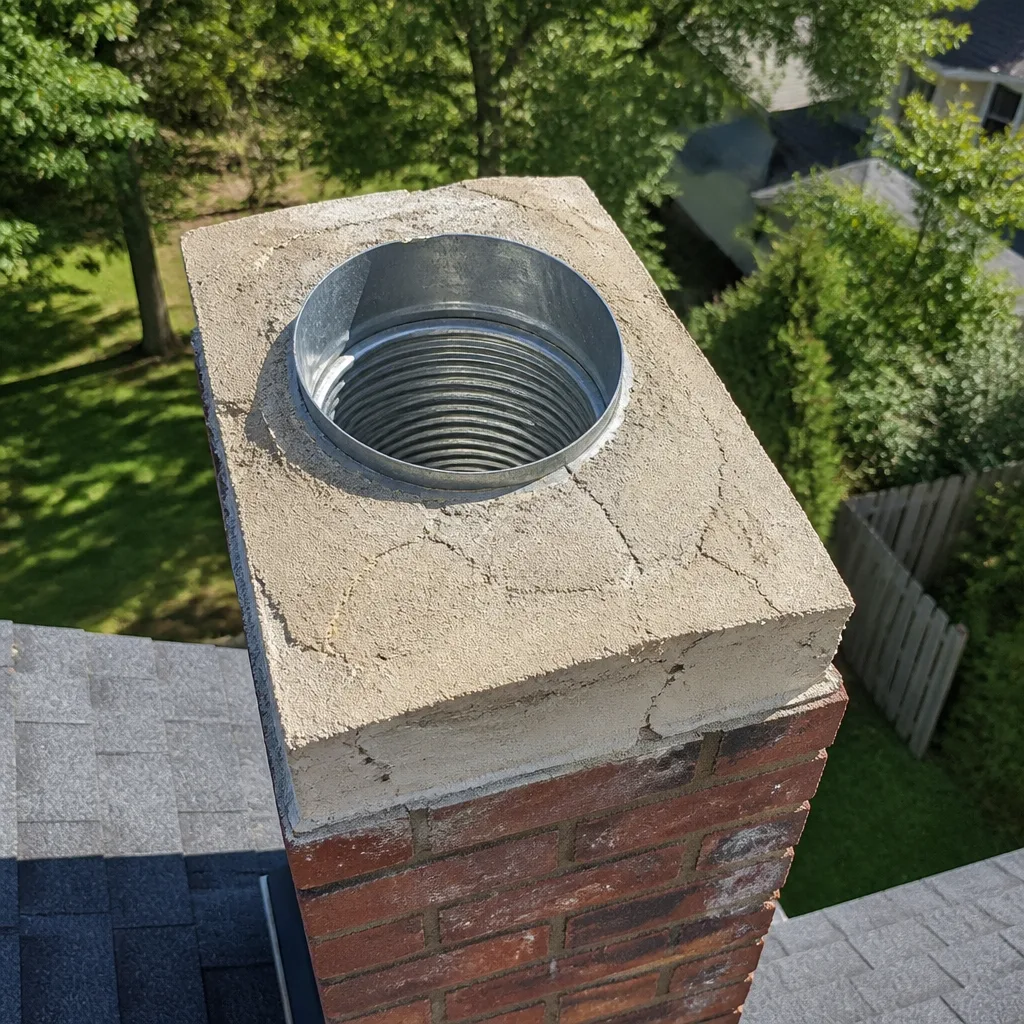
- The flue – a camera run through the full length, checking liner integrity, joints, and clearance.
- The crown – a cracked crown is how water gets into the chimney structure.
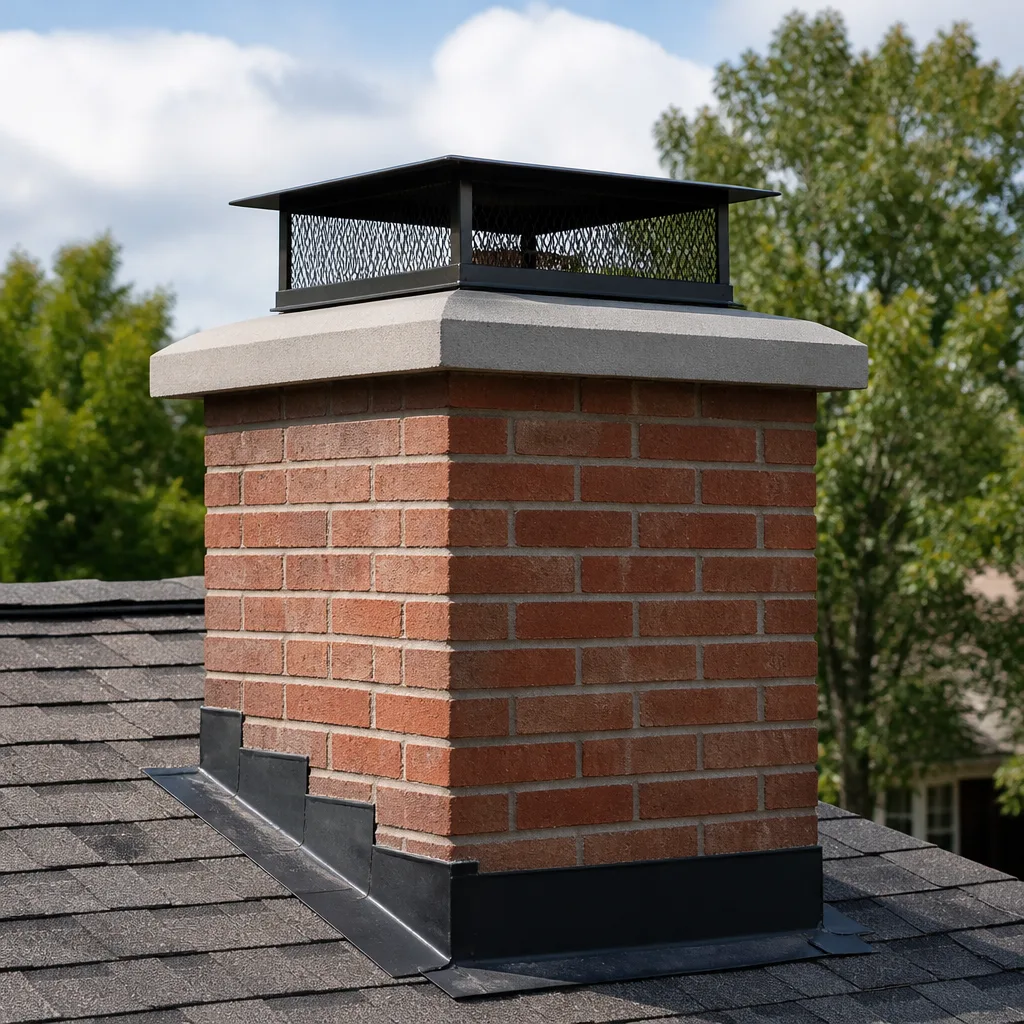
- The cap – a correctly fitted cap keeps water, animals, and debris out of the flue.
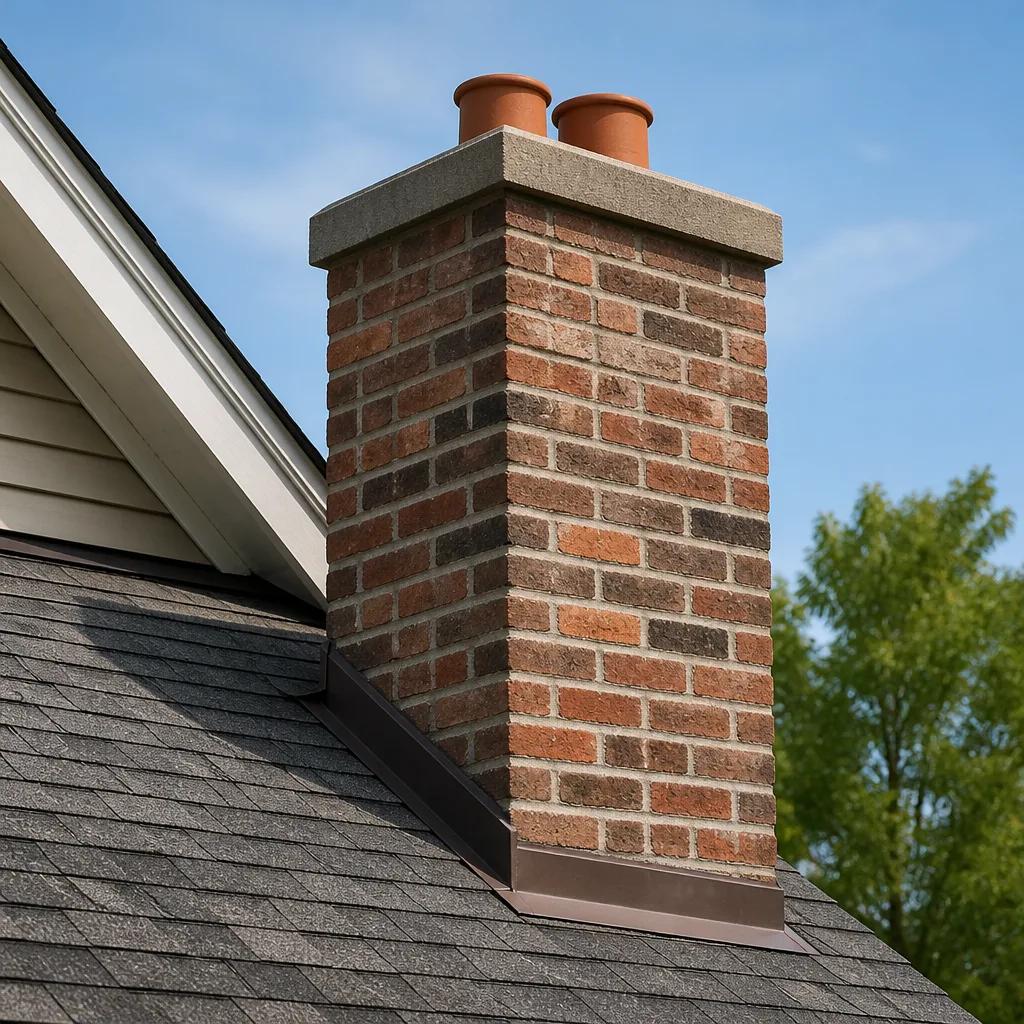
- The flashing and exterior joints – where roof-meets-chimney problems show up.
When a problem shows up anywhere on that list, the right repair depends on which component it is. A crown crack calls for a different response than a cracked flue tile. Relining a chimney calls for a flexible liner system sized to the flue and fitted to manufacturer specifications. HeatShield resurfacing calls for a certified installer. Every step is diagnosis before action, which is why we say: inspect first, repair right, no guesswork.
If you’ve been told by an inspector that your flue needs attention, this is the moment to hire a specialist who can act on the inspection rather than forwarding it to a third party.
What’s Different About Hiring in North Charleston
North Charleston homeowners face a specific mix of housing stock and weather that shapes what a chimney inspection is likely to find. The region’s humid summer air and the temperature swings of a Lowcountry winter work on masonry and metal over time. Neither creates an everyday emergency, but both accelerate wear on mortar joints, crowns, and flashing.
Chimneys in North Charleston tend to fall into two camps: masonry chimneys on older homes where decades of weathering show up in the mortar, and newer systems with liners that still need inspection before burning season. Neither camp is unusual. Both benefit from the same approach.
The other local factor is that North Charleston has no centralized vetting for chimney sweeps. The burden is entirely on homeowners across neighborhoods like Park Circle, Dorchester, and the older streets near downtown North Charleston. We see contractors offering very different scopes of work at similar prices. A $150 sweep isn’t a bargain if it’s $150 spent with no inspection. A properly inspected visit that tells you the crown needs sealing is worth considerably more.
For anyone who wants to know North Charleston service details before they call, we lay out the basics. One company covering sweep, inspection, and repair eliminates the coordination problem. That’s the model:
- The same team sweeps, inspects, and repairs.
- The same company that finds a cracked flue can reline it.
- The same technician who does the camera inspection carries the report into the repair.
A generalist and a second contractor cost you time and, in our experience, often cost you more money once the coordination is done.
Common Mistakes to Avoid
- Choosing the cheapest quote without comparing scope. Two quotes for $150 can look identical on price and be completely different on what happens inside the flue. Compare the written scope, not the total.
- Skipping the certification check. In a state with no chimney licensing, the CSIA credential is one of your only objective signals. Ask for it and verify it.
- Accepting a diagnosis without a photo report. If a contractor says you need a liner, you should be able to see the evidence. That’s not suspicion; it’s basic diligence.
- Hiring a generalist for the repair phase. A liner installed outside manufacturer requirements can void its warranty. The savings evaporate when the liner fails.
- Assuming a sweep alone keeps the chimney safe. A sweep clears creosote. An inspection reveals whether the flue is intact. Both matter, and one doesn’t substitute for the other.
- Ignoring the crown and cap. A cracked crown or a missing cap is how water enters a chimney structure across North Charleston’s humid seasons. These are small fixes that prevent large ones.
- Waiting until the first cold snap. June and July are the calmest months to book a full inspection, when the calendar is open and problems can be addressed before the season begins.
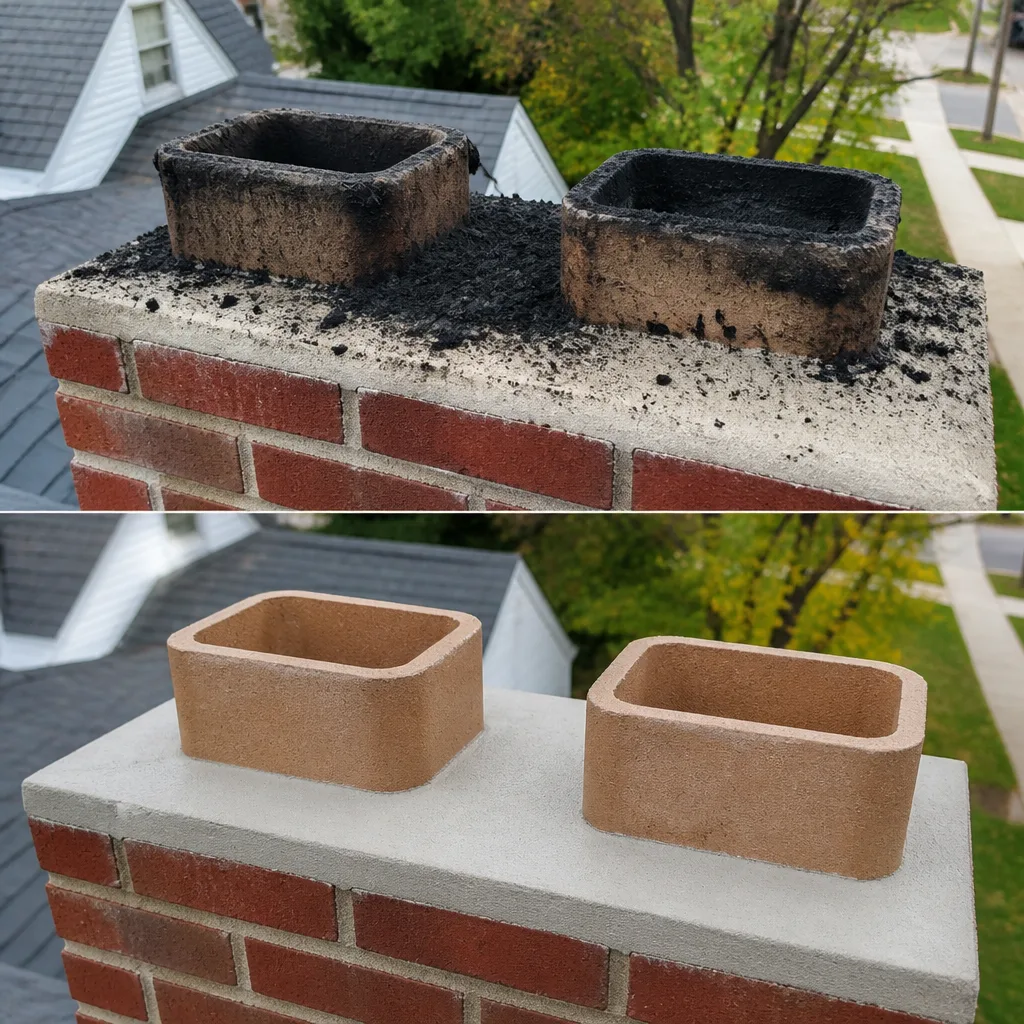
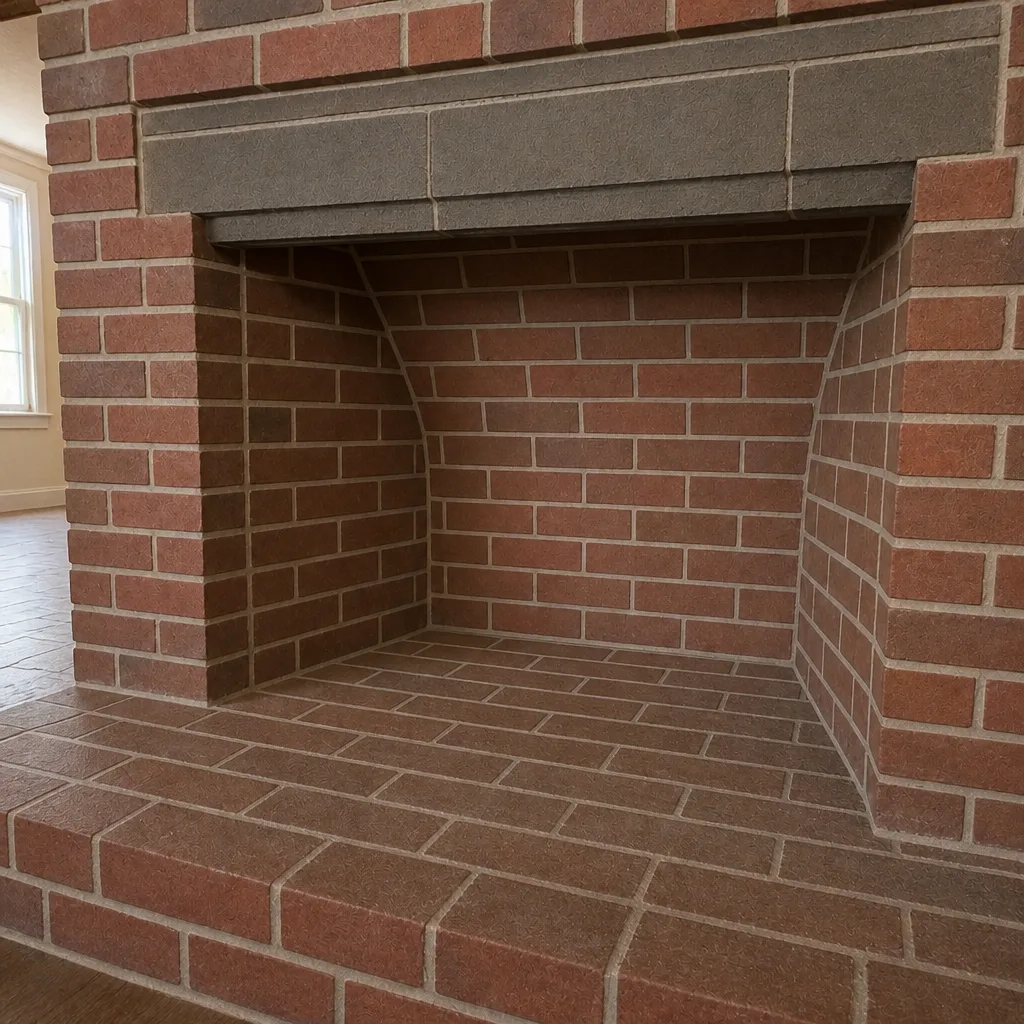
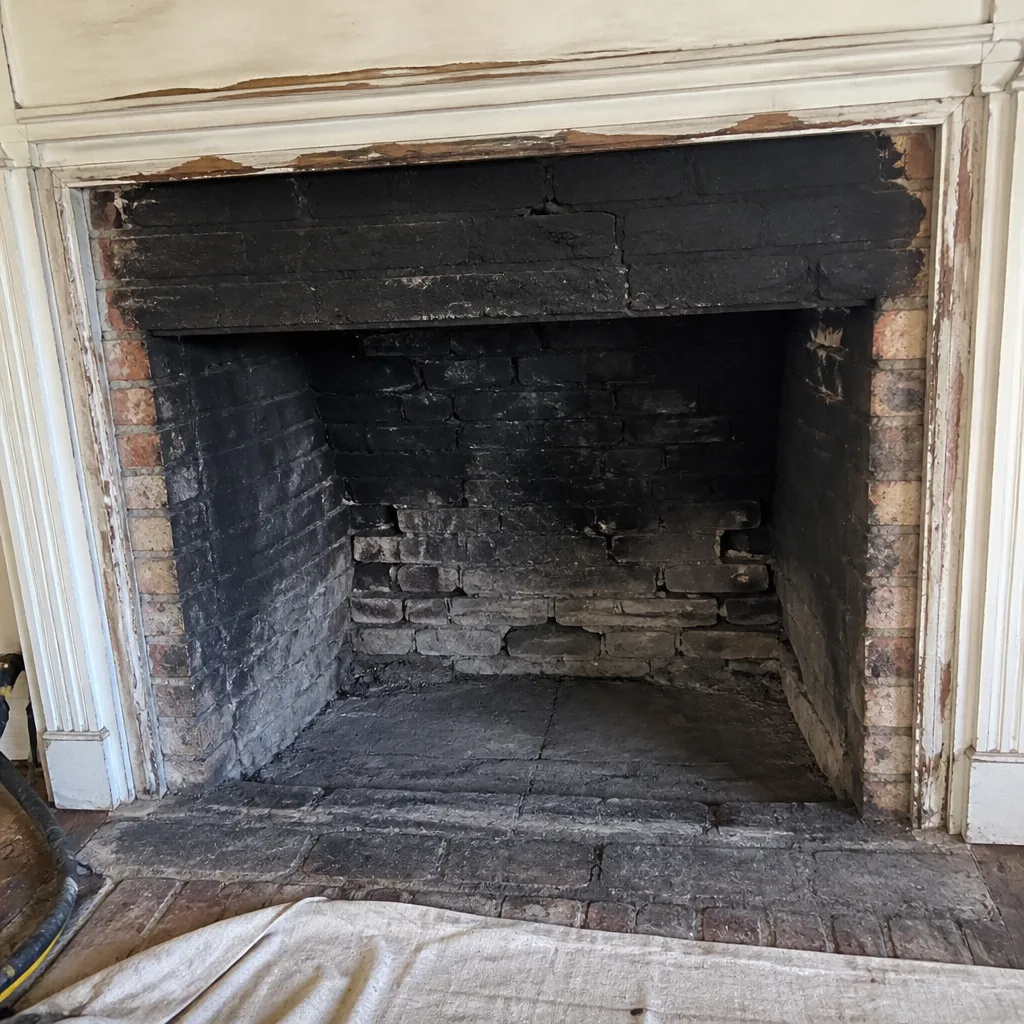
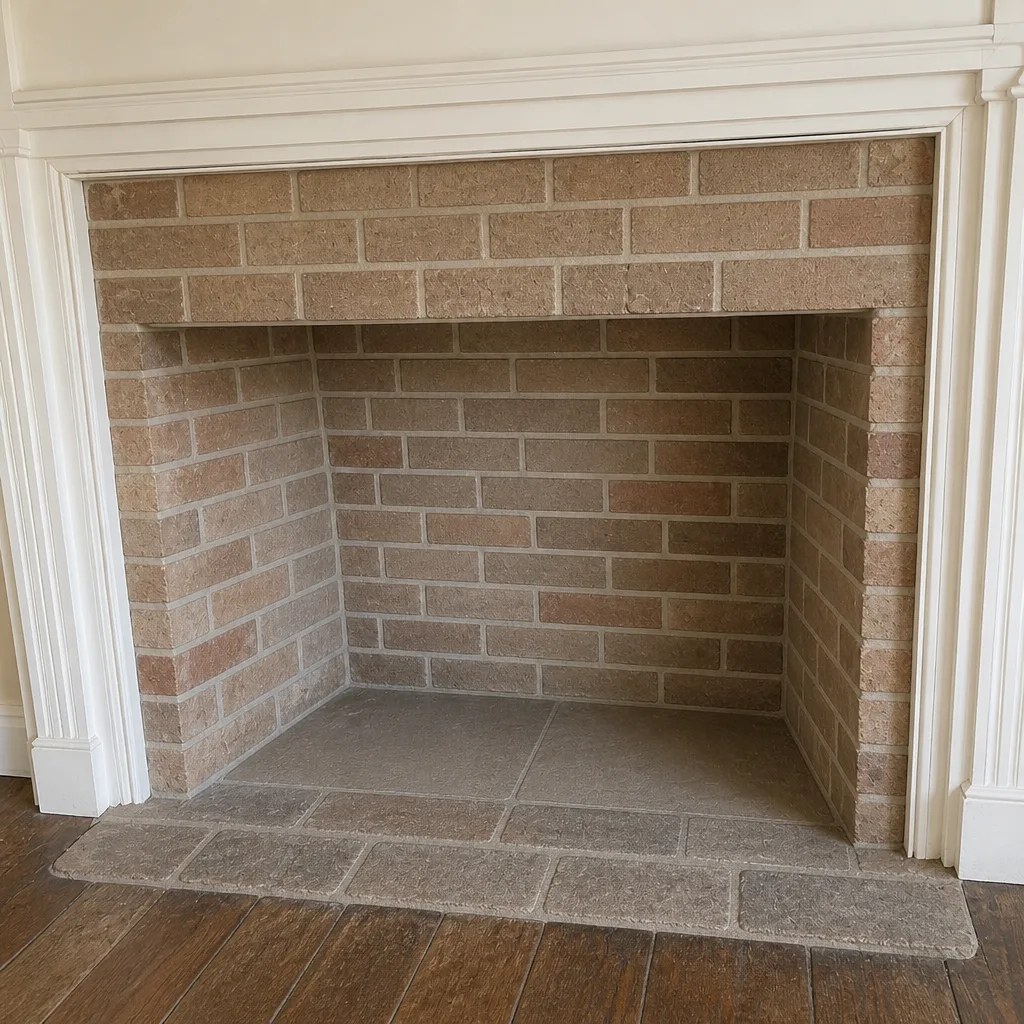
See the difference
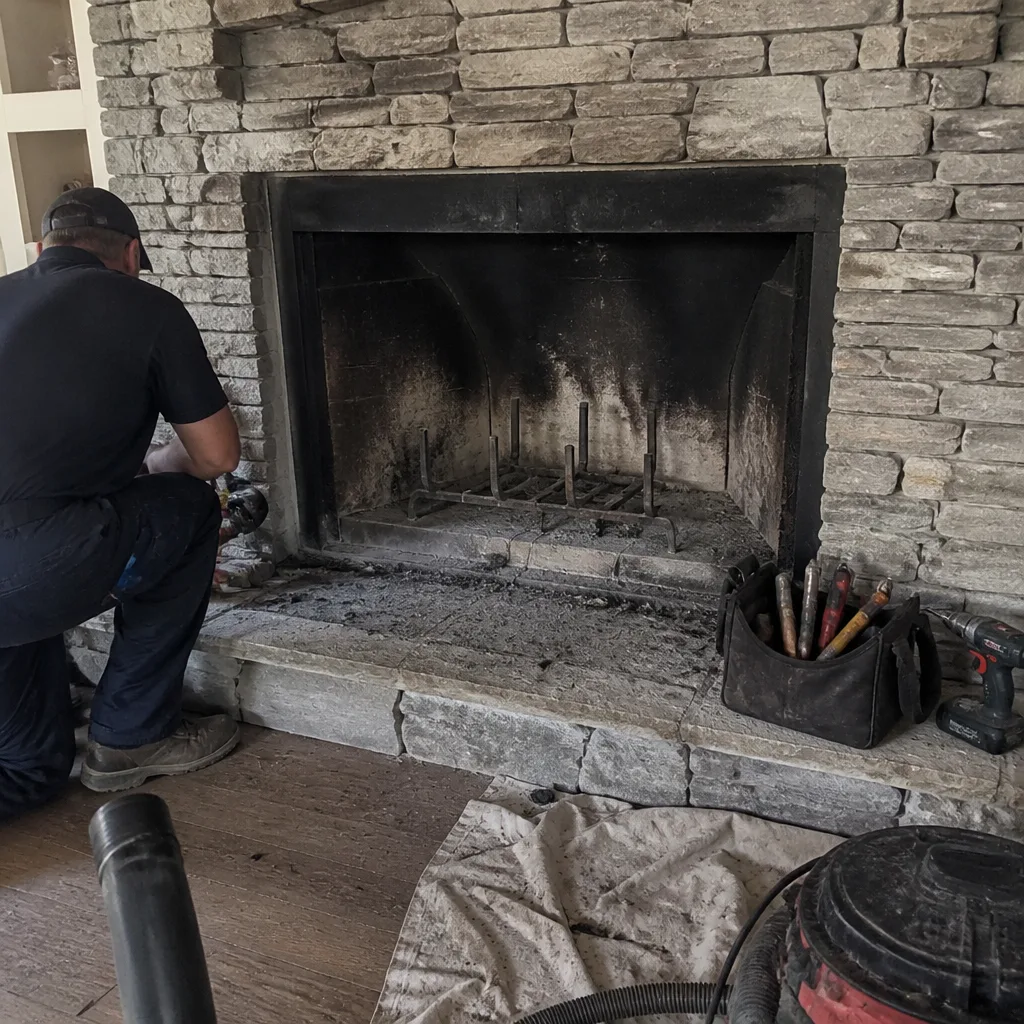 Before
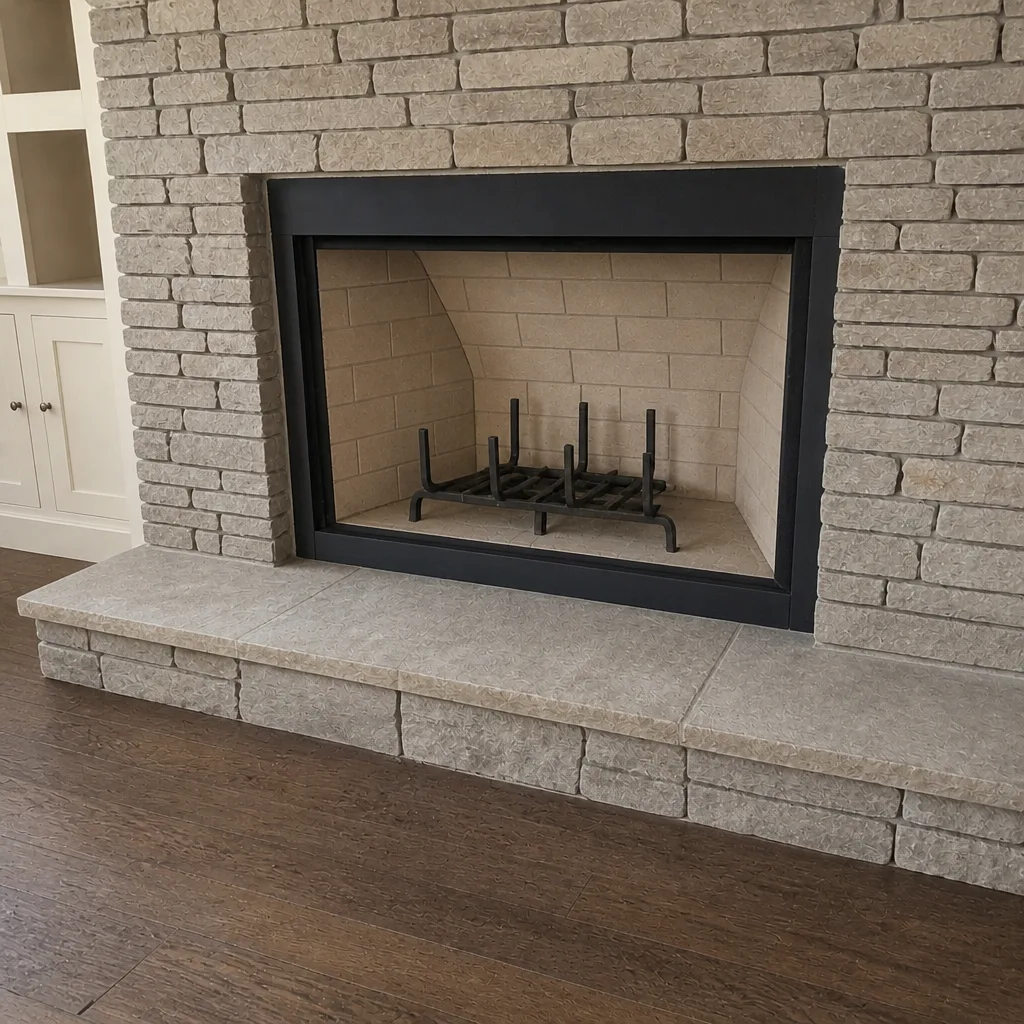 After
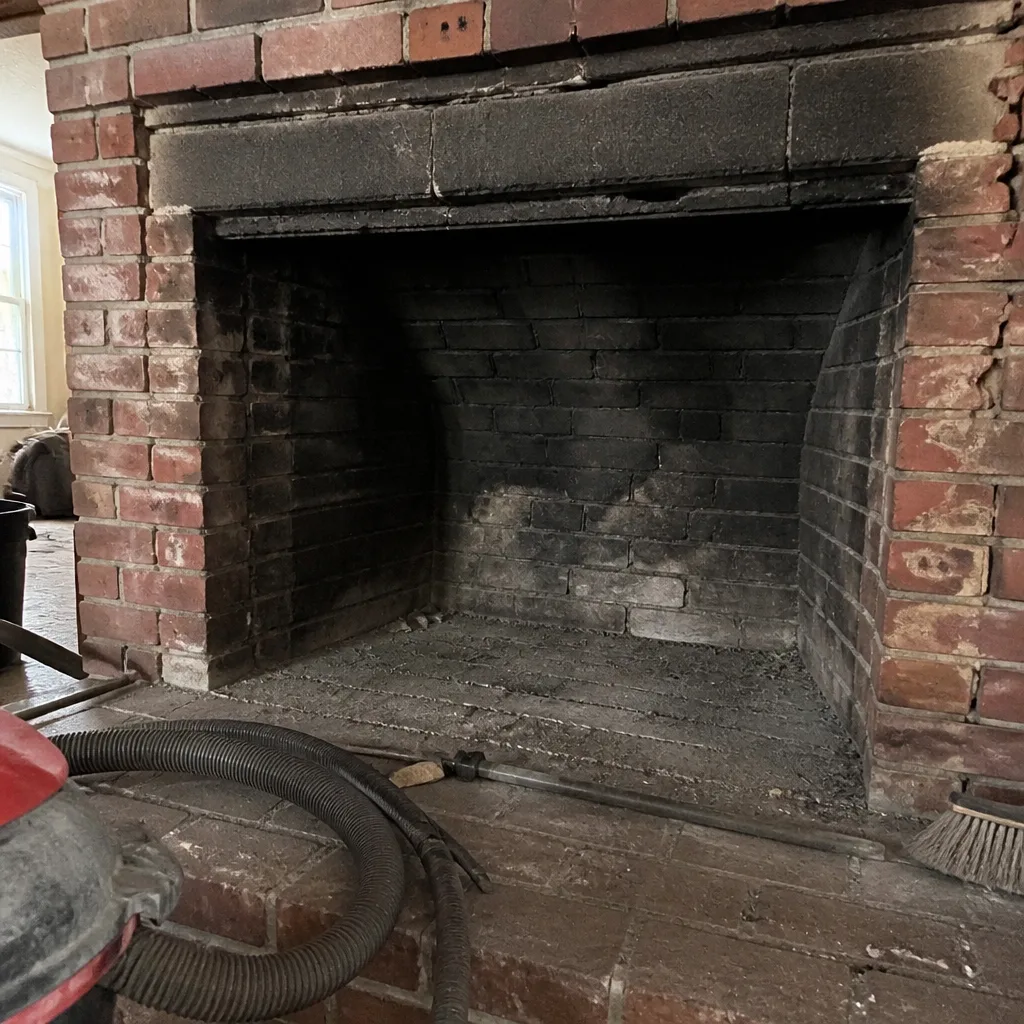 Before
 After
 Before
 After
When to Call a Professional
Some chimney work isn’t a DIY call. If your chimney has never been inspected, if you’ve just bought a home with a fireplace, if you smell smoke in the house when the fire is lit, or if the fire burns sluggishly with a lot of smoke, those are signs of a venting or structural issue that needs a trained eye. Draft problems can indicate a blocked or cracked flue. Odors from an unused chimney can indicate moisture or an animal nest. A damaged crown, flashing, or cap is a water intrusion problem waiting to grow.
You’ll also want a professional if an inspector has flagged your flue, if a liner’s age is unknown, or if you have a wood stove or gas insert that hasn’t been checked by someone with the right certification. Denali Chimney Sweep offers free estimates in North Charleston. Call (855) 723-7039. We answer 24/7. Fast dispatch from 7am to 7pm, Sunday through Friday.
Our technicians have up to 14 years of experience, and every one of them works exclusively on chimney systems.
Frequently Asked Questions
Typical chimney sweep pricing in the North Charleston market is per job by written estimate, and the estimate is free. We don’t quote from the driveway: the price depends on the chimney’s condition, the flue’s length, and whether an inspection reveals work beyond cleaning. Call (855) 723-7039 for an exact quote; estimates are free.
You need a liner if the flue’s internal surface is cracked, deteriorated, or unsuitable for your appliance. A camera inspection shows whether that’s the case. If the flue is undamaged and correctly sized, relining isn’t automatically on the table, and that’s what the photo report is for: to let you see the evidence yourself. Call (855) 723-7039 to have the flue inspected before you spend anything.
The CSIA and NFI recommend annual inspection for most chimney systems, with sweeping as needed based on use and creosote accumulation. Homes that burn fires regularly will typically need a sweep more often than homes that use their fireplace rarely or not at all. We’ll tell you what your North Charleston chimney actually needs, not what a schedule says. Call (855) 723-7039 for a written estimate.
Creosote builds up in the flue and can ignite if it reaches a threshold, and a cracked flue liner can allow combustion gases into the home. Neither is guaranteed to happen, and neither is a reason to panic, but both are the reason a professional inspection exists. Skipping it doesn’t create an urgent emergency; it creates the conditions where one can occur. Call (855) 723-7039 to book an inspection.
No. South Carolina does not require state licensing for chimney sweeps, which is why independent credentials matter. A company’s CSIA, NFI, or NCSG credential is checkable through the certifying organization, and that’s the standard to apply in North Charleston. Call (855) 723-7039 to talk about certifications before you book.
Anyone can push a brush up a flue, but that’s not the standard. A generalist typically can’t do a camera inspection, can’t install a manufacturer-warrantied liner, and can’t perform certified HeatShield resurfacing. Hiring a generalist often voids manufacturer warranties on liners and sealants. Call (855) 723-7039 to have the work done by a chimney specialist.
The Bottom Line
South Carolina’s lack of chimney sweep licensing means the homeowner carries the vetting burden. That changes the job from “find the cheapest price” to “find a certified specialist who inspects first and repairs with professional-grade materials.” Verify a CSIA or NFI credential independently. Ask whether one team sweeps, inspects, and repairs. Require a written estimate itemized with a camera inspection and photo report, named materials, and a flat-final-price statement. Avoid the generalist for liner and sealant work to protect your warranties. For any chimney issue in North Charleston, a specialist approach is the one that protects your home and your money.
If you’d like to talk through your chimney’s condition before you schedule anything, call Denali Chimney Sweep at (855) 723-7039 for a free estimate. We answer 24/7. Fast dispatch from 7am to 7pm, Sunday through Friday. From a routine sweep to a full flue relining, one call covers it.
Written by the team at Denali Chimney Sweep.