
Last updated November 15, 2026
 Sweep & inspection
 Caps & crowns
 Flue relining
 Masonry repair
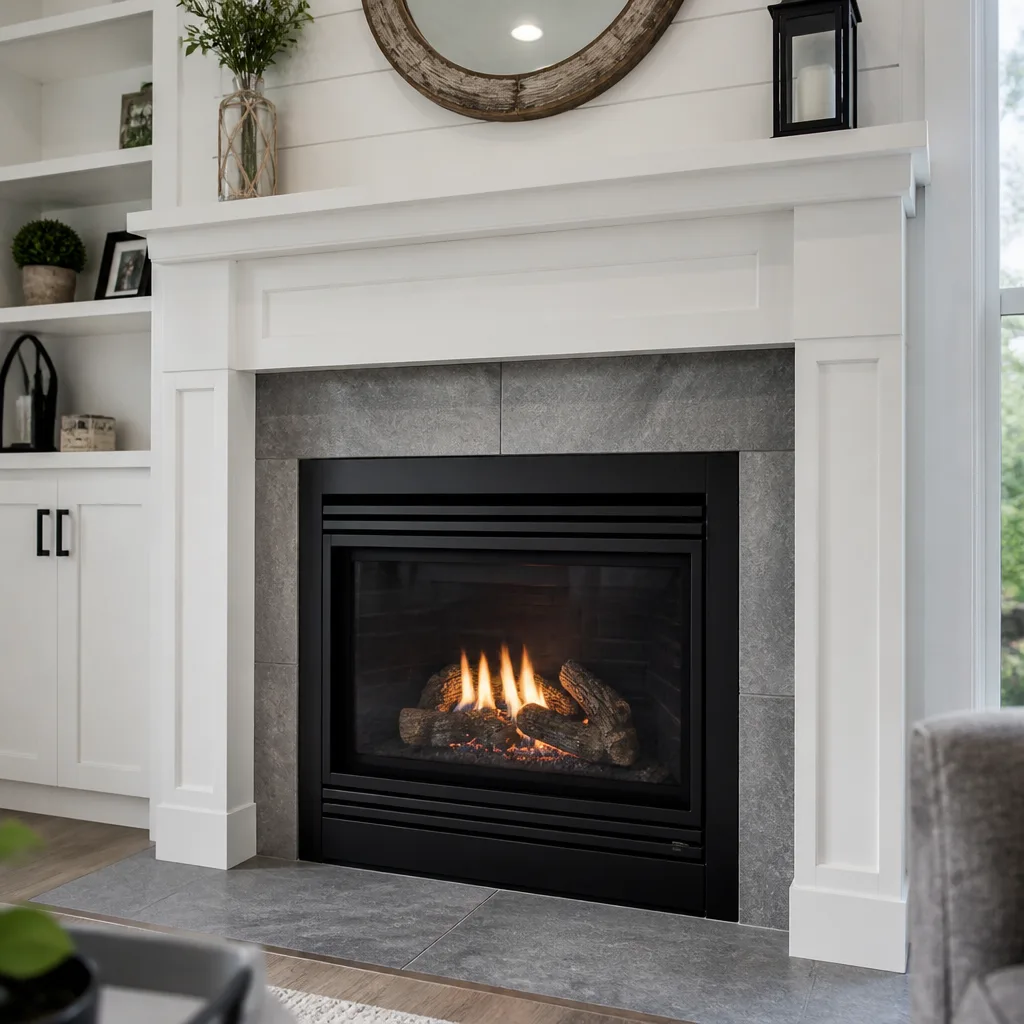 Gas fireplace service
Level 1 sweep and inspection to the NFPA 211 annual standard - flue, crown, cap, and flashing checked and photographed
Chimney sweep logs do not sweep chimneys. They loosen some creosote - which then falls where a brush and vacuum still have to collect it.
Chimney Cleaning Cost Breakdown: The North Charleston Homeowner’s Reference for 2026
When two quotes for the same chimney differ by $200, most homeowners reach for the lower one. That gap almost always traces to a single line item the low bid quietly left out, and it’s rarely the brushing. In our experience, what gets omitted is the camera scan, the smoke chamber work, or a written report you can actually read. This reference walks through what a proper sweep in North Charleston costs right now, which items every quote should show, and how to compare bids line by line instead of staring at a total. You’ll learn what’s a legitimate add-on and what’s a fabricated finding.
Quick Answer
A routine chimney cleaning in North Charleston typically runs $180 to $340, and a standard Level 1 inspection with a written report usually lands $150 to $400 depending on the chimney. A Level 2 inspection with full camera documentation typically costs $300 to $650. The final price is set per job by the written estimate, and any add-on should come with photo or camera evidence you can see for yourself. Estimates are free.
Styles & brands we work with
- Sweep & inspection
- Caps & crowns
- Flue relining
- Masonry repair
- Gas fireplace service
Table of Contents
- What you’re actually paying for: line by line
- The 2026 price breakdown for North Charleston homes
- Why North Charleston pricing runs differently from national averages
- The three inspection levels and when each one is warranted
- Legitimate add-ons versus upsells from fabricated findings
- How to compare quotes with a line-item checklist
- Cost thresholds that should trigger a Level 2 inspection
- What actually happens during a professional sweep
What You’re Actually Paying For: Line by Line
The price on a chimney cleaning invoice breaks into distinct pieces of work, and each one has a purpose. Understanding them lets you spot when something is missing. A sweep is not a single pass with a brush, and the cost reflects that. Learn what each line means and you’ll read every future quote with more confidence.
Here’s what a complete cleaning visit includes, and what each item covers:
- Flue cleaning: The core service. Brushing the flue to remove creosote, soot, and debris across the full run, not just the firebox.
- Firebox cleaning: Clearing ash, leftover wood, and soot from the firebox floor and walls before the flue work begins.
- Smoke chamber brushing: The sloped interior above the damper where creosote collects in the corners. This is the item low bids skip most often.
- Damper check: Confirming the damper opens and closes properly and seats well enough to control draft when the fireplace is idle.
- Debris removal and cleanup: Hauling out what comes down the flue and leaving the room clean.
- Camera scan: Pushing a camera up the flue to look at joints, liner condition, and gaps a brush can’t feel. Not every basic sweep includes this, and it’s the first thing to confirm.
- Written report: Documentation of what was found and what it means. A verbal “looks good” isn’t a report.
The cleanup is not trivial either. Creosote and soot travel. Tarping, sealing, and vacuuming with equipment rated for fine particulate matter add time to each job, and that time is real cost. When a quote lands far below the local range, one of these lines has to be trimmed somewhere. Ask which. The answer usually tells you whether you have a genuine quote or a partial one. If you’re ready to see what a complete visit looks like, our chimney sweep page walks through the full process.
The 2026 Price Breakdown for North Charleston Homes
Here are typical estimated ranges for chimney work in the North Charleston market. These are estimates, not quotes, and the written estimate sets the final price. Your chimney’s size, condition, and the level of inspection you need move the number up or down.
| Service | Typical Estimated Range |
|---|---|
| Standard flue cleaning (Level 1 service) | $180 – $340 |
| Level 1 inspection with written report | $150 – $400 |
| Level 2 inspection with camera documentation | $300 – $650 |
| Smoke chamber brushing (when not included in cleaning) | $75 – $150 |
| Chimney cap installation (Gelco or similar) | $250 – $500 |
| Crown repair or resurfacing | $400 – $900 |
| HeatShield flue resurfacing | $1,200 – $2,500 |
| DuraFlex flexible liner installation | $2,500 – $5,000 |
Read the table as a conversation starter, not a menu. Two chimneys of the same height can land in different spots because of what’s inside them. A flue with heavy glazed creosote demands more time than one brushed recently. A crown with hairline cracks needs small work; one that’s spalling needs more. Repair items are the ones most worth documenting before anything is recommended, and that’s why the camera scan and written report sit at the center of every estimate. If you want the repair side explained in detail, the chimney repair page covers what each fix actually addresses.
Why North Charleston Pricing Runs Differently from National Averages
Most chimney cleaning articles publish one number for the whole country. That figure blurs real differences. North Charleston pricing moves for reasons you can see on the ground: the area’s older brick construction, a short burn season that squeezes demand into a few months, and the practical cost of bringing the right equipment to each home.
Start with the housing stock. North Charleston has neighborhoods where masonry chimneys were built decades ago and were never relined to modern standards. Older brick work often means the technician has to handle partitions, offsets, and interior flues the brush won’t pass cleanly without slower, more careful work. That takes time, and time is what you’re paying for more than materials. A chimney with a clean, straight flue brushes quickly; one with bends and gaps does not.
The burn season is the second factor. This is a heating region, not a year-round fireplace region. Demand clusters around the cooler months, so booking early in the season means quotes stay closer to the lower end of the range. When everyone calls the same week the season changes, scheduling tightens. The work doesn’t become more expensive per job, but the calendar fills fast. Booking a sweep before the burn season is the practical move.
The third factor is what comes with the job. Fine soot control, camera equipment, and the branded materials above the cleaning line all carry cost. A polymer-based resurfacing product like HeatShield or a flexible liner system from DuraFlex isn’t commodity material, and it shows up in the line items because it lasts. We treat your chimney as a system, not a single sweep. If the flue needs resurfacing or relining, the cleaning-and-inspection price is only one part of the picture, and some chimneys here need that. Learn about the neighborhoods and homes we work with on our North Charleston page before you book.
The Three Inspection Levels and When Each One Is Warranted
Not every cleaning needs a full camera inspection. Matching the level of inspection to the situation is how you avoid paying for work you don’t need, and it’s also how you avoid missing a problem that a basic sweep won’t catch. Here are the three levels and what each one covers.
- Level 1 inspection: A visual check of accessible portions of the flue, firebox, and connected components during a cleaning. This is standard for a chimney already in regular use with no changes and no known problems.
- Level 2 inspection: Everything in Level 1, plus a camera scan of the full flue and documentation of its condition. This is warranted when a property changes hands, after an event like a chimney fire or a structural change, or when the flue type is uncertain.
- Level 3 inspection: Everything in Level 2, plus access into areas that require opening up construction when a serious hazard is suspected. This only happens when the situation on the ground calls for it, and it should never be recommended without evidence pointing there.
A standard cleaning visit is fundamentally a Level 1 service, and it’s where most North Charleston homes start. That doesn’t make a Level 2 unnecessary when the signs are there. If the chimney is old, if it hasn’t been inspected in a long time, or if the flue type is unclear, the camera scan earns its place in the estimate. The reason this matters for cost is simple. A basic sweep that skips the scan can miss a crack or a gap, and the repair that follows a missed gap is far more expensive than the scan would have been. Inspect first. Repair right. No guesswork. Our chimney inspection page explains what each level records.
Legitimate Add-Ons Versus Upsells from Fabricated Findings
The most common complaint we hear is not about price. It’s about homeowners being told they need thousands of dollars of liner or masonry work with no way to verify it. That situation is avoidable. The dividing line is evidence. A legitimate add-on comes with camera footage or photos you can look at and understand. An upsell usually doesn’t.
These are legitimate add-ons with a clear technical reason behind them:
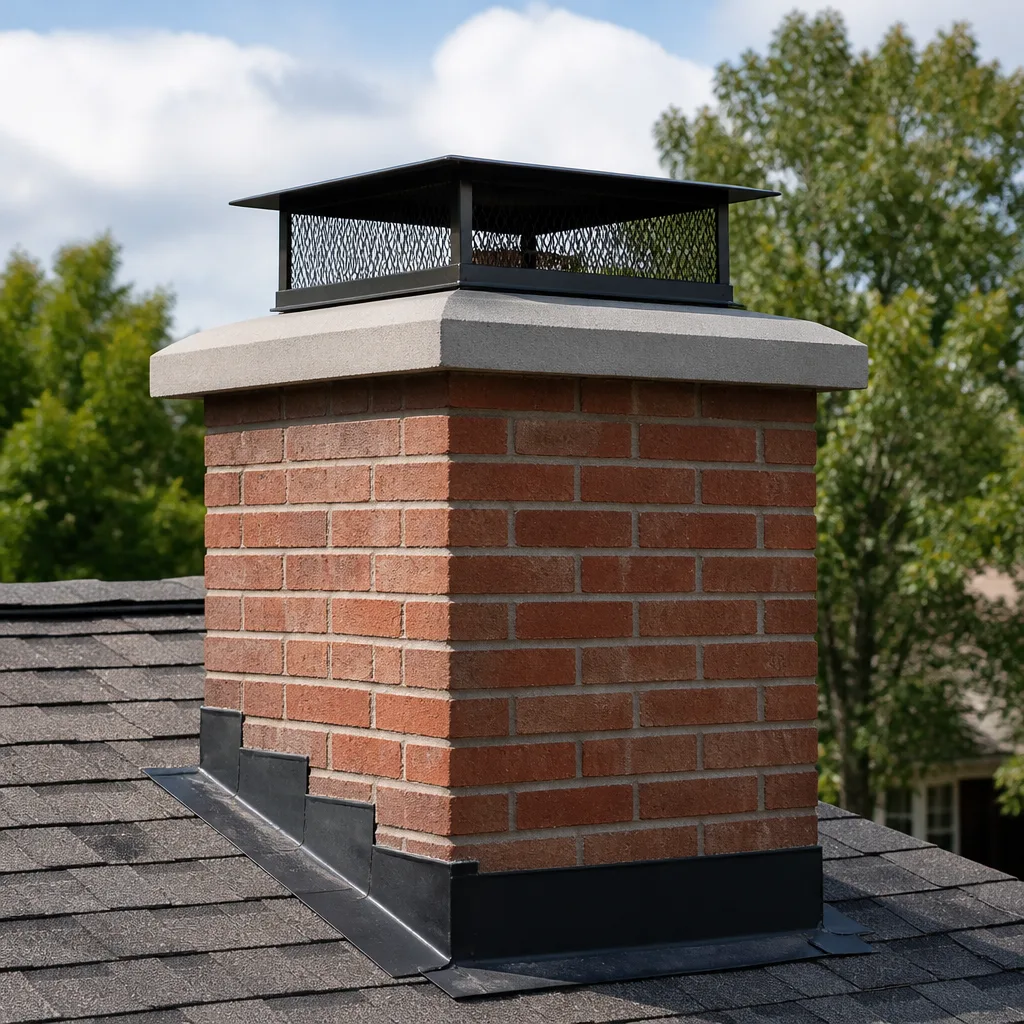
- Chimney cap installation: A cap keeps rain, debris, and animals out of the flue. If your chimney has none, recommending a Gelco cap is straightforward. The fit and durability of a precision cap are worth the investment.
- Crown repair or resurfacing: A cracked crown lets water into the masonry. Small cracks can be sealed; failing crowns need rework. The photos should show the cracks.
- Smoke chamber repair or resurfacing: The smoke chamber is often the worst-angled, hardest-to-brush surface in the system. If the camera shows heavy creosote in its corners, the extra brushing is real work.
- Flue resurfacing (HeatShield): When the flue’s interior is rough, pitted, or has gaps at the mortar joints, a manufacturer-specific restoration process seals it back to a smooth surface. This is a specialized capability, and not every sweep can perform it.
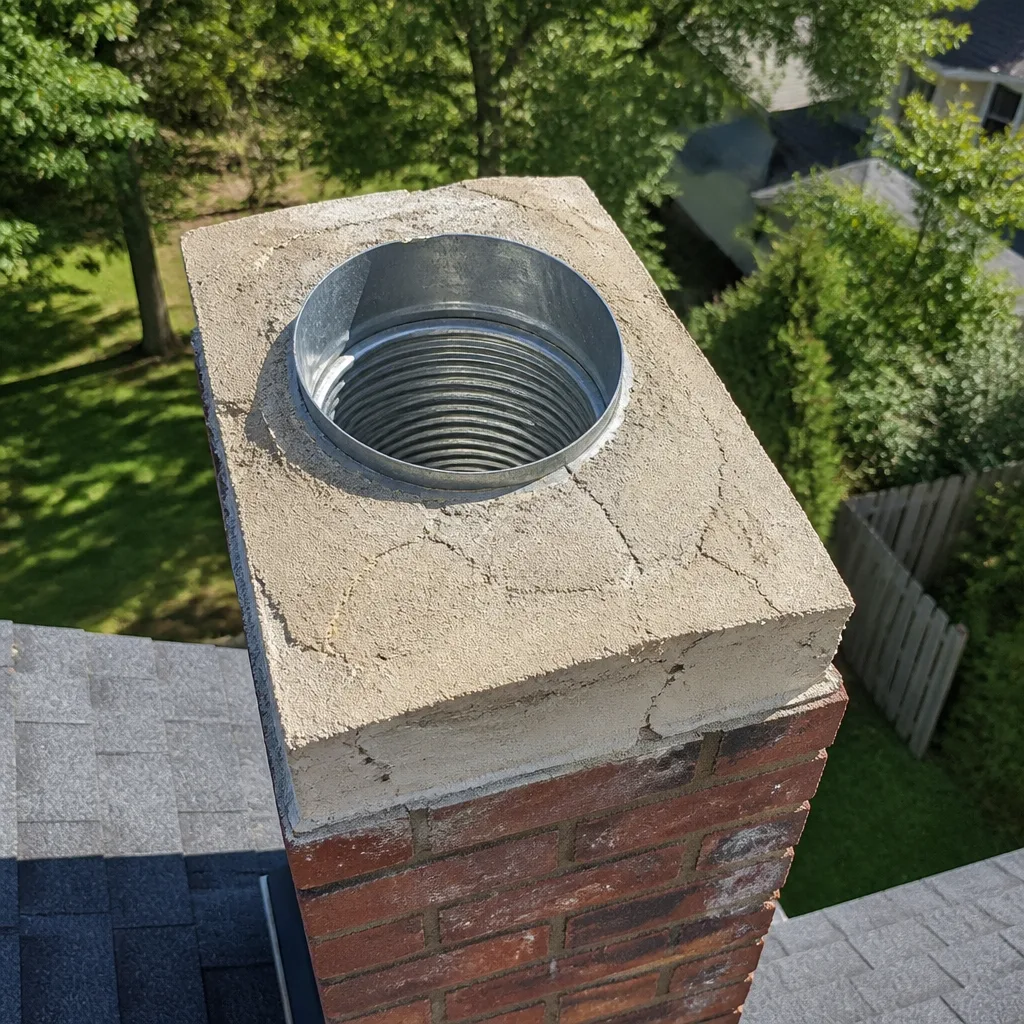
- Full chimney relining (DuraFlex): When the existing flue has failed, a flexible liner system from DuraFlex rebuilds the safe path for exhaust inside the chimney chase. It’s a structural repair, not a cleaning extra.
The tell for an upsell is a finding with no documentation, or a recommendation made before the chimney has been inspected at all. A worker who says “you need a new liner” while standing on the roof without a camera is working from a guess. Ask to see the footage. Ask how the flue looked, what the camera showed, and what happens if the work waits a season. A specialist will answer all three plainly. If the honest answer is that repair can safely wait, you’ll hear that too. That’s how we work. Every recommendation is tied to what the camera showed, and you see it for yourself before you decide.
How to Compare Quotes with a Line-Item Checklist
Comparing two quotes by total price tells you almost nothing. A $150 quote and a $300 quote might be the same work, or one might be missing the camera scan and the report. Use a checklist instead. Put the line items side by side and see what you’re actually comparing. This turns a guessing game into a clear read.
Here’s a checklist you can use for any quote you receive:
- Flue cleaning scope: Does it state full flue brushing, or just a firebox cleaning?
- Smoke chamber: Is brushing included, or listed as an extra?
- Camera scan: Is it in the quote, or omitted? This is the item to confirm.
- Inspection level: Does the quote say Level 1, 2, or 3?
- Written report: Is a documented report included?
- Cleanup and debris removal: Stated, or assumed?
- Any repair recommendation: Is it tied to camera footage you were shown?
Two quotes that both show every line are comparable. Two that don’t aren’t, no matter what the totals say. The lower number often wins a bid because it simply covers less, and that’s the gap worth spotting before you sign. Bring this checklist to your next quote conversation and the comparison takes a few minutes. When you’re ready for a line-item estimate on your home, this page is a good place to start for sweep and inspection work.
Cost Thresholds That Should Trigger a Level 2 Inspection
A cleaning quote that climbs above the standard range is a signal worth reading carefully. When the number on a Level 1 estimate pushes toward the top of the band, it’s usually because the technician found something, or expects to. That’s the moment to ask whether a Level 2 inspection belongs in the plan. The scan costs more up front, but it replaces guesswork with evidence.
Here are the situations where a Level 2 is the right call, whatever the cleaning price:
- A recent chimney fire. Even a small fire can crack flue tiles or warp a liner. A camera scan is how you know.
- A property changing hands. A new owner needs a documented baseline for the chimney, and a Level 2 provides it.
- An older masonry chimney with no inspection history. Decades-old brick and mortar may have gaps the brush can’t detect.
- A change in heating appliance. Swapping a fireplace for a wood stove or inserting a gas unit changes draft and exhaust requirements.
- Signs of trouble inside the home. Staining on the ceiling, smoke backing into the room, or a persistent odor after burning all point to issues worth scanning.
- An unclear flue type. If the technician can’t confidently describe what the flue is made of, the camera settles it.
If your cleaning quote comes in high and the technician recommends a Level 2, that’s not a reason to walk away. Ask to see the reason, then have the scan done. The camera tells you in minutes whether the extra work is needed now or can safely wait. The answer shapes the repair cost that follows. For a chimney in a North Charleston prewar home, the scan often pays for itself by showing the flue is sound and no repair is needed. That’s a finding worth the price.
What Actually Happens During a Professional Sweep
Understanding the visit sequence makes the invoice make more sense, and it helps you spot a technician working out of order. A proper sweep follows a consistent path, and each step corresponds to a line item you’re paying for. Here’s the sequence a specialized crew follows.
- Set up and protection. Tarps and sealant go around the firebox to protect the room, and vacuum equipment designed for fine soot gets placed and started before any work begins.
- Firebox and appliance check. The firebox is cleared, the damper is checked, and the appliance or insert is examined for access and condition.
- Flue brushing. The flue is brushed from above or below, depending on the chimney, with the correct brush for the flue’s shape. The full run gets cleaned, not just the top.
- Smoke chamber work. The smoke chamber above the damper is brushed and, where needed, resurfaced or sealed to restore a smooth exhaust path.
- Camera scan. The camera goes up the flue to inspect joints, liner condition, and the smoke chamber from the inside.
- Report and photos. Findings are documented in a written report, with photos or footage where relevant, and any repair recommendation is explained on the spot.
You’ll notice the sequence ends with documentation, not a sales pitch. The report is the point of the visit. It tells you whether the chimney is safe to use, whether anything needs repair, and whether the work can safely wait. From there, anything that happens next is your call. Our technicians have up to 14 years of experience, and every tool and material we bring is specific to chimney systems. We use professional-grade supplies from Olympia Chimney and Famco, and install HeatShield and DuraFlex systems when the flue needs them. From annual cleaning to full flue relining, one call covers it.
Getting Your North Charleston Chimney Ready for the Season
Timing matters in this market. The burn season is short and the pre-season weeks fill up fast. Booking a sweep before the first cold snap means the work gets done while the calendar is open, and any repair the inspection turns up has time to happen before you’ll want a fire. If the camera shows the flue is clear, the report confirms it and you’re done.
Before the technician arrives, a few small things help the visit go smoothly. Clear the area around the fireplace. Move rugs and furniture back so the tarps and equipment fit. Point out any concerns you’ve noticed during the previous season. The more the technician knows going in, the more useful the report will be. When the visit ends, you’ll have a documented condition report and a clear answer on whether your North Charleston home’s chimney is ready to burn.
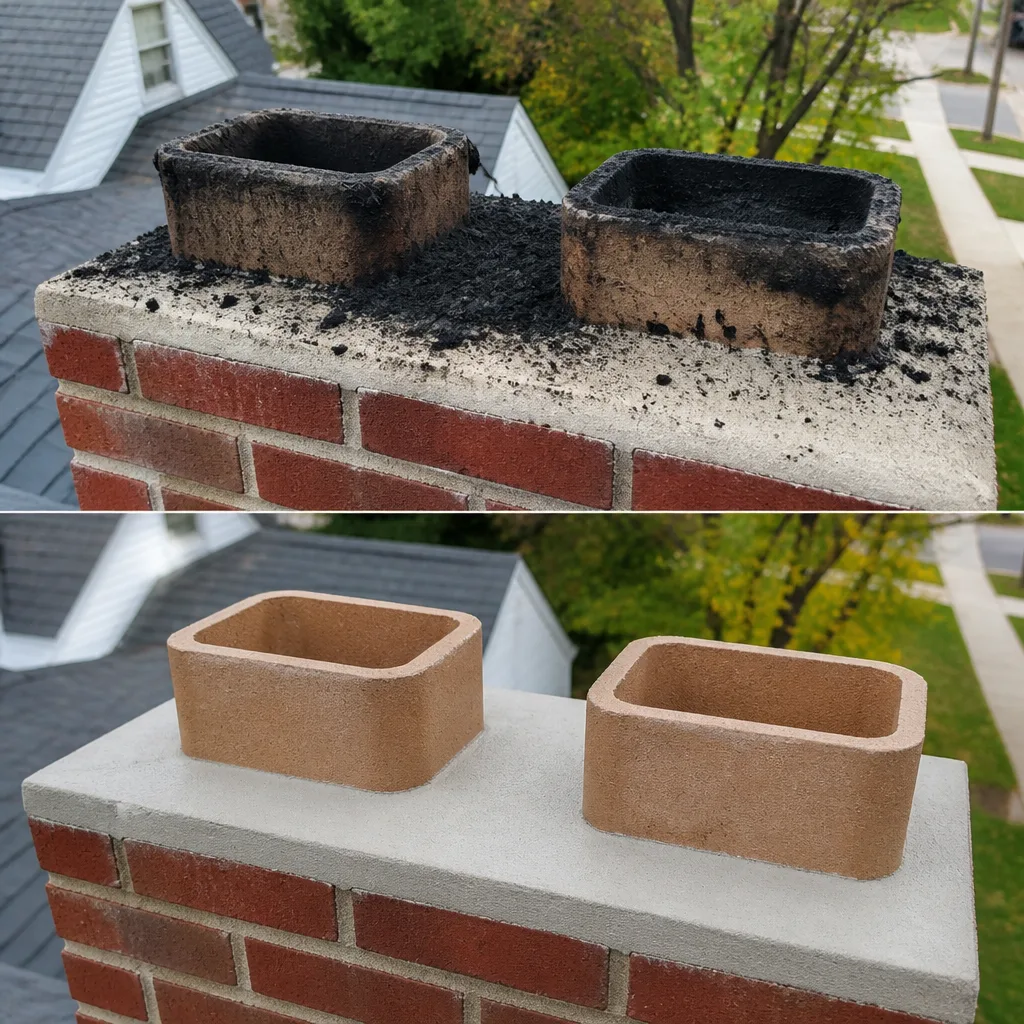
See the difference
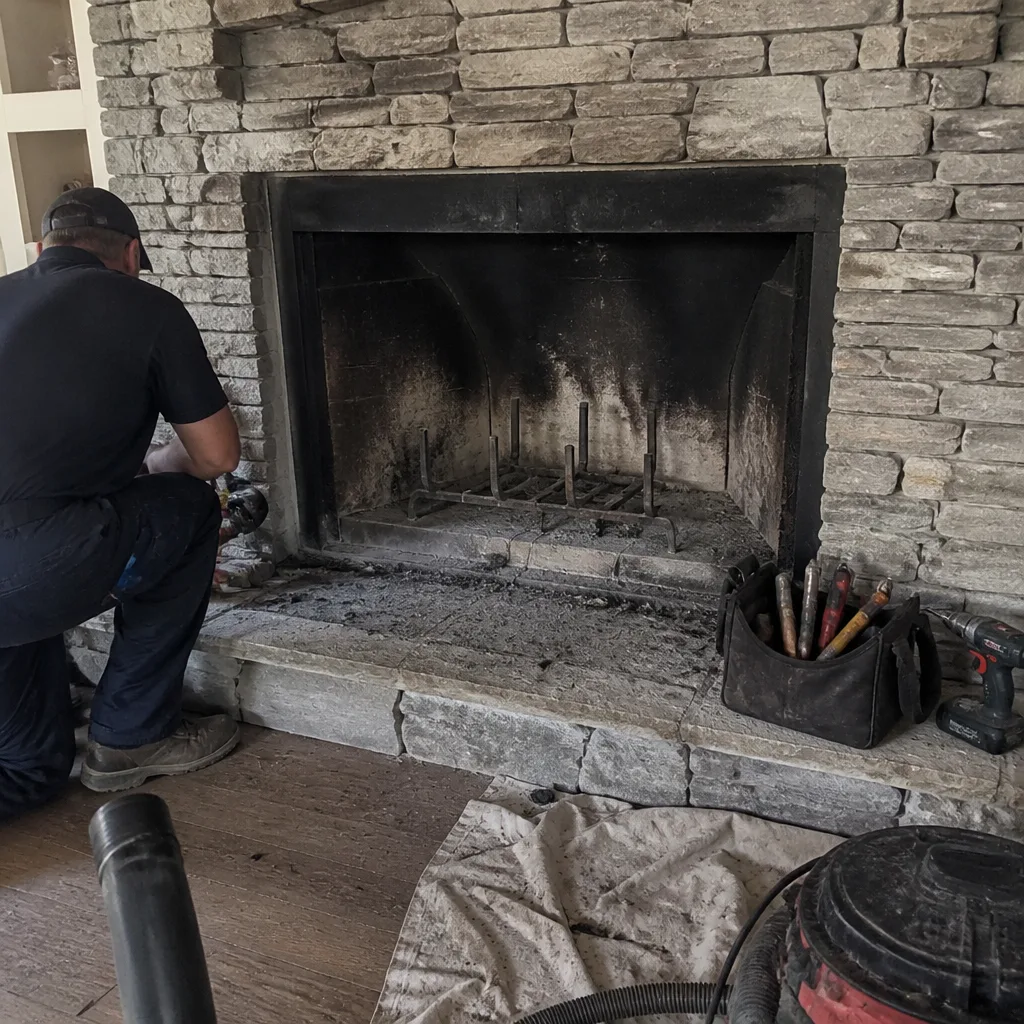 Before
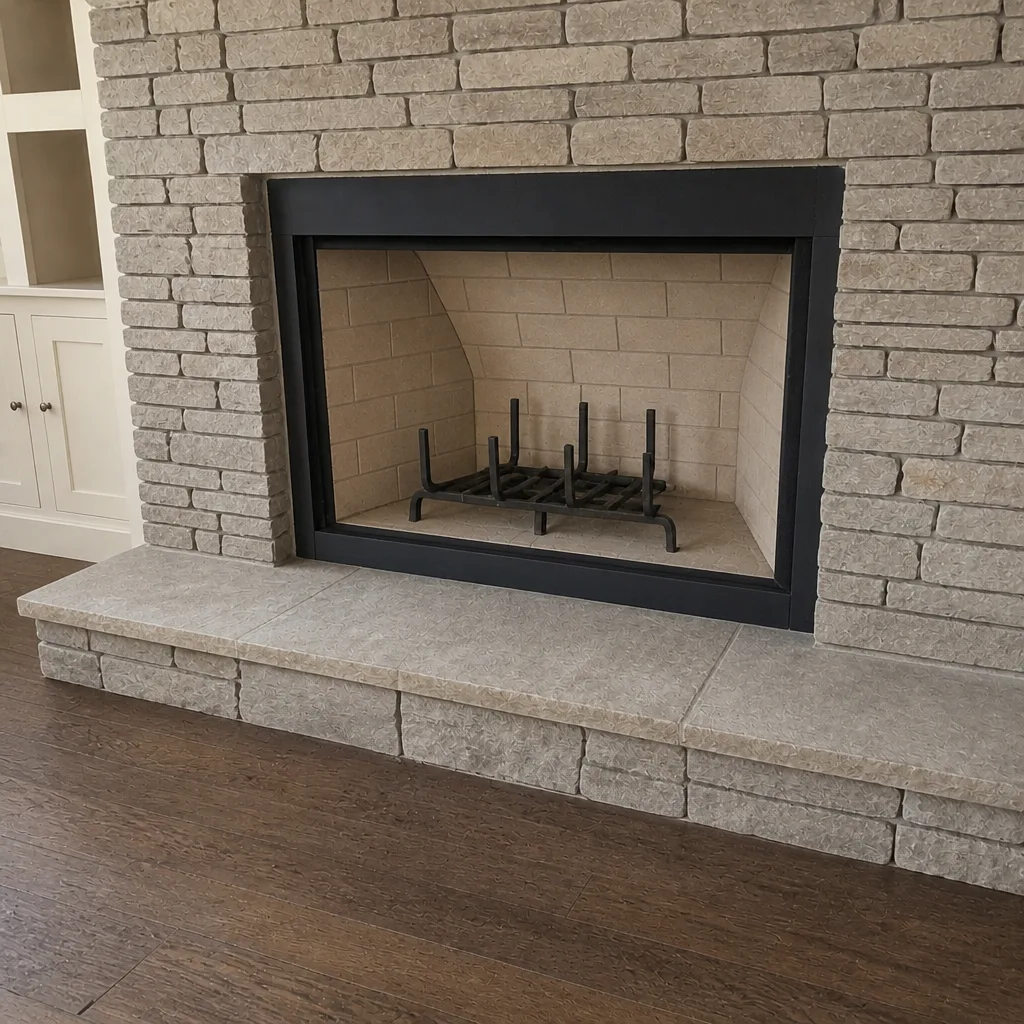 After
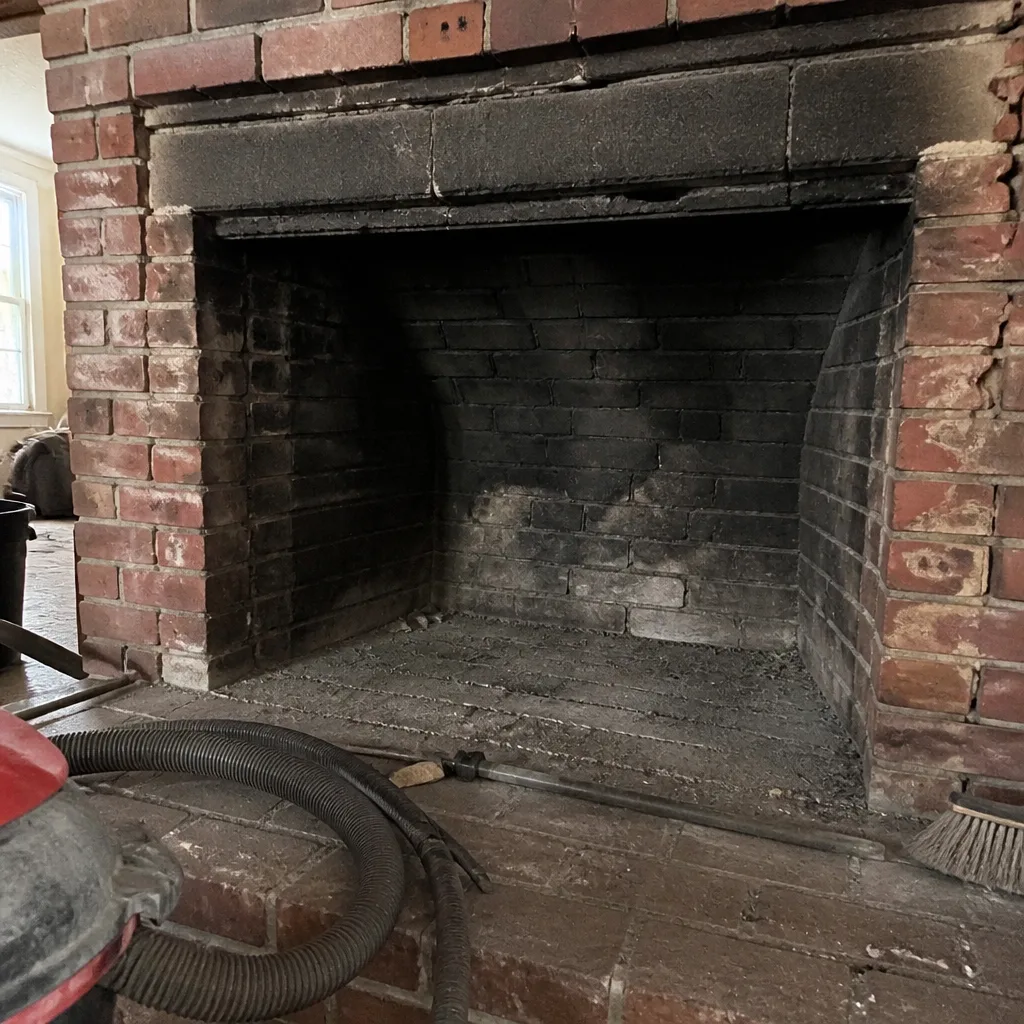 Before
 After
 Before
 After
Common Mistakes to Avoid
- Picking the lowest bid without comparing line items. The gap between quotes is usually one omitted item. Compare scope, not totals.
- Accepting a repair recommendation without seeing the evidence. If a camera scan wasn’t performed or you weren’t shown the footage, ask why before agreeing to anything.
- Skipping the camera scan on an older chimney. Old masonry can hide cracked joints that brushing alone won’t find. A scan is how you learn what’s actually there.
- Waiting until the first cold week to book. Demand clusters tightly around the season change, and the calendar fills fast. Book before the burn season starts.
- Confusing a firebox cleaning with a flue cleaning. A quick ash removal doesn’t clean the flue. Confirm the scope covers the full run.
- Letting an unresolved creosote buildup wait indefinitely. Heavy creosote in the flue is a chimney fire risk. If the report flags it, schedule the cleaning rather than putting it off.
- Assuming a verbal “looks good” is the same as a written report. A documented report is part of the service and protects you as a homeowner.
When to Call a Professional
Some situations need a call now. A chimney fire, any fire that happened inside the flue, is the clearest one. So is smoke backing into the room when you burn, or a strong smell that lingers after the fire is out. A ceiling stain near the chimney chase deserves attention. If a property inspector told you the flue needs work, get a specialist to look before assuming the worst. And if it’s been more than a year since the last sweep, book a cleaning and inspection to establish a baseline. Denali Chimney Sweep offers free estimates in North Charleston. Call (855) 723-7039. We answer 24/7. Fast dispatch from 7am to 7pm, Sunday through Friday.
Frequently Asked Questions
A standard chimney cleaning in North Charleston typically runs $180 to $340 for a Level 1 service, and a Level 2 inspection with a camera scan runs $300 to $650. The written estimate sets the final price. Call (855) 723-7039 for an exact quote. Estimates are free.
Only if the camera footage shows the existing flue has failed, with cracks, gaps, or deteriorated joints. If the flue is sound, no liner is needed. Ask to see the footage before agreeing to anything. It’s the only fair test. Call (855) 723-7039 to have your flue scanned and documented.
Once a year is the standard for a chimney in regular use, and more often if you burn frequently or notice heavy creosote. A yearly sweep and inspection keeps the flue clear and catches problems while they’re small. Call (855) 723-7039 to book before the burn season.
Creosote builds up in the flue and becomes a fire risk, and small flue defects go unnoticed until they get worse. A missed crack or gap can lead to smoke problems or a larger repair than the scan would have caught. Skipping a year is a risk you don’t need. Call (855) 723-7039 to schedule a sweep.
Local factors move the number. This area has older masonry homes that take more careful flue work, and the short burn season compresses demand into a few months. The right quote reflects the actual chimney in front of the technician, not a national figure. Call (855) 723-7039 for a local estimate.
You can get just a cleaning. Nothing is recommended unless the camera shows a reason for it, and any recommendation is tied to footage you can see. If the work can safely wait, you’ll be told that. Call (855) 723-7039 to book an inspection on your terms.
The Bottom Line
Chimney cleaning cost in North Charleston hinges on what’s included, not on the total at the bottom of the page. A complete sweep runs $180 to $340, a Level 1 inspection $150 to $400, and a Level 2 with camera documentation $300 to $650, with the written estimate setting the final price. The real value is the scan and the report, because those turn a quote into evidence you can read. Local factors shape the number here: older masonry homes, a short burn season, and the equipment and materials that come with the job. Compare quotes line by line. Ask for the camera footage. And when the report says the repair can wait, let it wait. If you want a specialist who treats the chimney as a system from cleaning through relining, that’s the work we do across Denali Chimney Sweep.
Call (855) 723-7039 for a free estimate. We answer 24/7. Fast dispatch from 7am to 7pm, Sunday through Friday, and we’re closed Saturday. Signed Written by the team at Denali Chimney Sweep.